Whole-Home Humidifier Installation in the Denver Metro
If you’ve lived through a Front Range winter, you already know the symptoms. Shocks off the doorknob. A nosebleed in the middle of the night. Trim that pulled away from the baseboard sometime around February. That’s not your imagination, and it isn’t something you fix with a tabletop unit you refill every morning.
Why Denver Homes Get So Dry Once the Furnace Kicks On
Cold air holds very little moisture. When your furnace pulls in that 20-degree January air and heats it to 70, the amount of water in the air doesn’t change, but the air’s capacity to hold water goes way up. Relative humidity falls off a cliff. Run that cycle for a few months straight in a semi-arid climate at 5,280 feet, and the inside of your house ends up considerably drier than the weather report outside would suggest.
The EPA recommends keeping indoor humidity between 30 and 50 percent. Plenty of homes from Wheat Ridge to Centennial sit well under that floor all winter without the owners ever knowing, because nobody has a hygrometer on the wall. They’re about ten dollars at any hardware store, and we’d rather you measure your own house than take our word for it.
Colorado adds a wrinkle most parts of the country don’t deal with: our winters aren’t continuous. A Chinook rolls down off the foothills, it’s 62 degrees in the middle of January, the furnace barely cycles for three days, and the air stays bone dry the whole time. That pattern matters a lot when you’re choosing which type of humidifier to install, and it’s the part most homeowners don’t hear about until after the fact.
What a Whole-Home Humidifier Actually Does for Your Home
Protect Woodwork and Home Furnishings
Colorado’s dry air sucks moisture out of building materials. Proper humidity prevents hardwood floors from shrinking or gapping, stops drywall from cracking, and protects wooden furniture, cabinetry, and musical instruments from warping.
This is the one that costs real money. Refinishing gapped hardwood in a Denver bungalow or re-taping cracked drywall runs well past what a humidifier and its install would have.
Relief from Dry Air Symptoms
Once the heat is running, indoor humidity in a Colorado home routinely drops below the range the EPA considers healthy. A humidifier brings it back into the 30 to 50 percent window, which takes care of static electricity shocks, dry skin, chapped lips, bloody noses, and scratchy throats.
Better Immunity and Respiratory Health
Influenza and other respiratory viruses stay infectious longer in dry air, and dry nasal passages weaken the body’s natural defense against illness. Maintaining balanced air moisture keeps mucous membranes hydrated, which supports the airway’s own ability to clear what you breathe in.
Low Maintenance and Effortless Operation
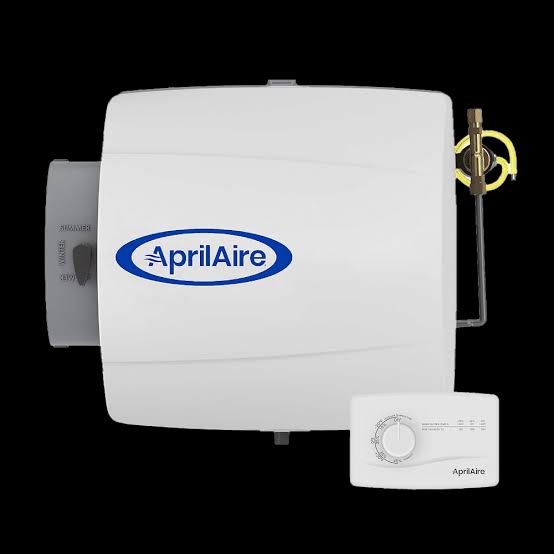
Unlike noisy tabletop units that require daily refilling and frequent cleaning, a whole-home bypass or fan-powered humidifier monitors and manages moisture levels automatically throughout every room in the house. It draws from your home’s water line and drains to the same place your high-efficiency furnace already drains. Once a year you swap a water panel. That’s the whole job.
Bypass, Fan-Powered, or Steam: Which One Fits Your House
Bypass Humidifiers
The simplest and least expensive option. A bypass unit mounts on the supply or return plenum with a short duct running between the two, and warm air from the furnace passes across a wet evaporator pad on its way through. No moving parts beyond a water valve and a damper.
The catch: a bypass humidifier only adds moisture while the furnace blower is actually running. On those 60-degree January afternoons, it does nothing. It also needs physical room for that bypass duct, which not every mechanical closet has.
Fan-Powered Humidifiers
Same evaporative principle, but with a small dedicated blower pulling air across the pad. That means higher moisture output and no bypass duct to route, which makes them the practical answer in tight utility closets and the cramped basements common in older Golden, Edgewater, and Wheat Ridge homes.
Steam Humidifiers
A steam unit boils its own water and injects vapor into the duct, so it runs whether or not the furnace is firing. Highest output, most precise control, and the only type that reliably keeps up in a large home or a leaky older one. It needs a dedicated electrical circuit, which adds to the install.
Steam is also the right call if you’re on a heat pump. Heat pumps deliver air at a lower supply temperature than a gas furnace, and evaporative humidifiers depend on hot supply air to work. Pair a bypass unit with a heat pump and you’ll be disappointed. We’d rather tell you that up front than sell you the cheaper box.
How the Job Changes Across the Denver Metro
Same climate, same dry winter, but the right humidifier for a 1924 four-square in Edgewater isn’t the right one for a 2016 build in southeast Aurora. Here’s roughly how it breaks down.
Older Homes in Golden, Wheat Ridge, Edgewater, and Central Denver
Pre-war and mid-century houses leak. Dry outside air is constantly working its way in around windows, sills, and the rim joist, which means a humidifier here is fighting a bigger load and usually needs more capacity than square footage alone would suggest. The upside is that these homes breathe, so they’re more forgiving if the setting runs a little high.
The real constraint is space. Furnaces in these houses are often wedged into a corner of a low basement with pipes and ductwork crowding the plenum, and there’s simply nowhere to run a bypass duct. Fan-powered units solve that most of the time.
Newer Subdivisions in Aurora, Arvada, and Littleton
Tighter construction changes the math completely. These homes hold onto moisture, so a smaller unit does the job. But that same tightness means there’s nowhere for excess humidity to go, and condensation shows up on the windows fast when the setting is off. An outdoor temperature sensor isn’t optional in a house like this. It’s the difference between comfortable and a mold call in March.
Foothills Homes in Morrison and West Lakewood
Sit higher up against the hogbacks and your overnight lows run colder than they do out on the plains. The gap between a mild afternoon and a hard freeze at 5 a.m. is wider, and a fixed humidistat setting that’s fine at noon will be putting water on your glass before sunrise. Automatic outdoor compensation matters more here than almost anywhere else in the metro.
Multifamily and Commercial Properties
We work with property managers across Denver, Sheridan, and Englewood on multifamily buildings where a single dry-air complaint usually turns out to be a dozen. Approach depends entirely on the system: individual units on separate furnaces get individual humidifiers, while buildings on rooftop equipment need a different conversation. We’ll walk the property and tell you what’s realistic.
Sizing and Setting It for a Colorado Winter
Output is rated in gallons per day, and matching it to your home means looking at square footage, ceiling height, how tight the envelope is, and where the ductwork runs. An undersized unit runs constantly and never reaches setpoint. An oversized one is a moisture problem waiting to happen.
That second failure mode is the one we see most around here, and it’s worth understanding before you install anything. Set a humidifier at 45 percent and let the temperature drop to zero overnight, and you’ll wake up to water running down the inside of your windows and frost on the frames. Do that all winter and you get rot in the sashes and mold in the corners. You solved dry air and bought yourself a worse problem.
The fix is a humidistat with an outdoor temperature sensor, which automatically walks the target down as it gets colder outside. We set these up during installation and show you how to read them. General guidance is 30 to 40 percent through a normal Colorado winter, dialed lower during a hard cold snap. Your windows are the best sensor in the house. If they’re sweating, back it off.
What Humidifier Installation Involves
We start by looking at your furnace, your ductwork, and your mechanical space, because those three things determine what will actually fit and work. Then we recommend a type and a size, explain what each option costs, and let you decide.
The install itself is typically a single visit. We mount the unit to the plenum, tie into a nearby cold water line, run the drain, wire the humidistat, and cut in the bypass duct if the design calls for one. Before we leave, we test it, verify it’s holding setpoint, and walk you through the settings and the seasonal damper.
If your ducts haven’t been looked at in a while, that’s worth addressing at the same time. A humidifier distributes moisture through whatever’s already in your ductwork, so duct cleaning before installation makes sense in some homes.
Water Panels, Hard Water, and Seasonal Maintenance
Evaporative humidifiers use a water panel that mineral scale gradually plugs up. Plan on replacing it at least once a heating season, and twice if your water leaves heavy deposits.
How fast that happens depends on where you live. Denver Water supplies Denver and much of the surrounding suburbs, while Aurora runs its own system drawing on different sources, and hardness varies from one address to the next across the metro. What your neighbor two cities over does isn’t a reliable guide for your house. Pull the panel halfway through your first winter and look at it. That tells you your own interval.
In spring, the water gets shut off and the bypass damper moves to its summer position. Skip that step and you’ll run humid air through the unit all summer. We handle both the panel change and the seasonal switchover as part of our HVAC Service Plan, alongside your annual furnace and AC tune-ups.
Why Choose Touchstone Mechanical
We’ve been working on Denver metro heating and cooling systems since 2014. Humidifiers aren’t a bolt-on afterthought for us; they’re part of the same system we’re already sizing, ducting, and balancing, and we treat them that way.
You’ll get a straight recommendation, not a menu of upsells. If your house doesn’t need a steam unit, we’ll say so. If the problem is actually leaky ductwork pulling dry attic air into your return, we’ll tell you that instead of selling you equipment that won’t fix it.
Pricing is quoted before we start, and financing is available if you’d rather spread it out. We’re licensed and insured, and we work on residential, commercial, and multifamily properties.
Humidifier Service Areas Across the Denver Metro
We install and service whole-home humidifiers in Lakewood, Wheat Ridge, Edgewater, Arvada, Golden, Littleton, Morrison, Sheridan, Englewood, Aurora, Denver, and surrounding communities throughout the metro area. Our trucks are staged on the west side, so Lakewood, Golden, and Wheat Ridge calls tend to get the fastest turnaround, but we cover the full metro from the foothills to Aurora.
Frequently Asked Questions
Can a whole-home humidifier be added to my existing furnace?
In most cases, yes. Any reasonably modern forced-air furnace can accept one. What determines the answer is the physical space around your plenum, whether there’s a cold water line within reach, and whether there’s a drain nearby. Homes with the furnace jammed into a narrow closet, common in older Denver and Wheat Ridge basements, sometimes can’t accommodate a bypass unit and its duct, in which case a fan-powered or steam model solves it. We’ll know within a few minutes of looking at your setup.
How much does installation cost?
It depends on the type of unit, its capacity, and how much work the water and drain connections require. A straightforward bypass install on an accessible furnace is at the low end. A steam humidifier that needs a new electrical circuit run is at the high end. We quote the whole job after we’ve seen your system, and you’ll know the number before any work starts.
Will a whole-house humidifier cause mold or window condensation?
It can, if it’s set too high for the outdoor temperature. This is the most common problem we’re called out to correct, and it’s almost always a control issue rather than an equipment issue. A humidistat with an outdoor sensor prevents it by lowering the target automatically as it gets colder. Watch your windows during the first hard freeze after installation. If moisture is collecting on the glass, the setting is too high for that day.
How often does the water panel need to be replaced?
At least once per heating season. If you see heavy white crusting on the panel partway through winter, make it twice. A plugged panel doesn’t fail loudly, it just quietly stops evaporating much water, and most people don’t notice until the static shocks come back.
Do I still need one if I have a heat pump instead of a furnace?
Usually more so. Heat pumps run longer cycles at lower supply air temperatures, which is efficient but means the air moving through your ducts isn’t hot enough to evaporate much water off a pad. A steam humidifier operates independently of supply air temperature, so it’s the type we recommend for heat pump homes.
What humidity level should I actually run in a Colorado winter?
Somewhere between 30 and 40 percent for most of the season, adjusted down when it gets very cold. The EPA’s broader 30 to 50 percent guidance applies year-round, but the upper half of that range is difficult to hold in a Denver winter without condensation trouble. Homes up in Morrison and the foothills usually need to sit lower still on the coldest nights. Pick up an inexpensive hygrometer and put it somewhere central, away from the kitchen and bathrooms.
Schedule a Humidifier Consultation
If your home gets uncomfortably dry every winter, or you’ve noticed gapping floors and cracking trim, contact Touchstone Mechanical and we’ll take a look at your system and tell you what makes sense.
Call or text (720) 432-4181 Business hours: Monday through Friday, 8:00 a.m. to 5:00 p.m.
We serve homeowners, contractors, and property managers throughout the Denver metro, from Golden and Arvada east to Aurora. We do not provide emergency services.




 Small Business Website Design